GILL INSTRUMENTS: TRUSTED GLOBALLY IN METEOROLOGICAL SENSING
Main Menu

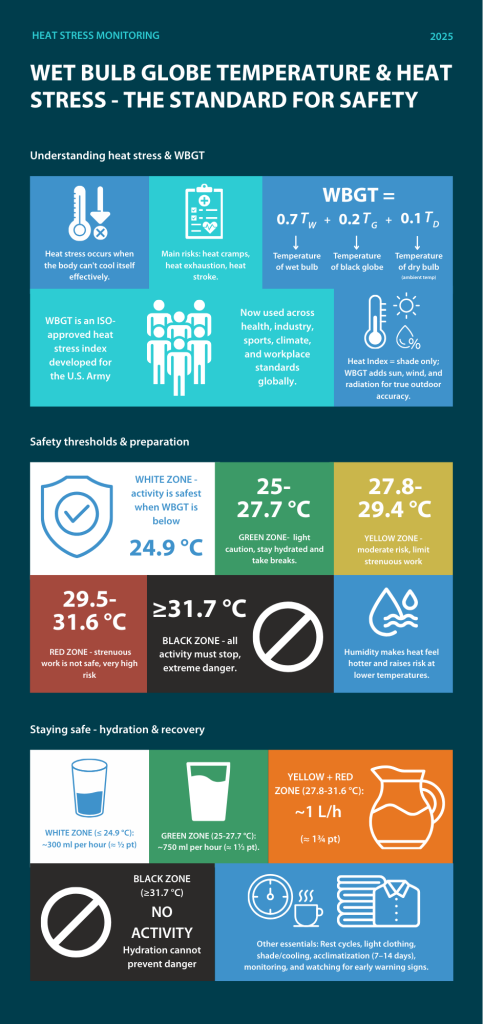
Heat stress occurs when the body can’t cool itself effectively, causing excess heat to build up. This happens when the body produces and retains more heat than it can release, leading to symptoms and potential health risks from overheating.
Causes: Heat stress can result from high temperatures, high humidity, direct sun exposure, strenuous activity, or wearing heavy/protective clothing.
Risks: If not addressed, heat stress can progress to more serious heat-related illnesses such as heat exhaustion or heat stroke.
Susceptibility: While anyone can be affected, older adults, young children, those with certain medical conditions, and people working in hot environments are more vulnerable.
Prevention: Stay hydrated, take breaks in cool areas, and wear light, breathable clothing to reduce the risk.
One of the most reliable ways to measure heat stress is the Wet Bulb Globe Temperature. WBGT is a standard used worldwide to determine how hot it feels when temperature, humidity, sunlight, and wind are all taken into account. It helps industries, sports organisations, and health services assess safe working and activity conditions during extreme heat.
What it measures: WBGT factors in temperature, humidity, wind speed, sun angle, and solar radiation (cloud cover).
How heat stress index differs from the heat index: The heat index only considers temperature and humidity in shady conditions. WBGT measures heat stress in direct sunlight, giving a more complete picture of the risks.
Yes, there is an important difference. The heat index is a simple heat measurement that only factors in temperature and humidity for shady conditions. While useful, this does not reflect the true heat load on the body when working or exercising in the sun.
By contrast, the Wet Bulb Globe Temperature measures heat stress in direct sunlight, accounting for temperature, humidity, wind speed, sun angle, and solar radiation. This makes WBGT a more accurate indicator of real-world heat exposure and its potential risks.
Measuring heat stress is essential for recognising when environmental conditions could pose a risk to health, safety, and performance. By monitoring the level of heat exposure, steps can be taken to prevent heat-related illnesses and maintain safe working or activity conditions.
Protects health: Early detection of dangerous heat levels helps prevent conditions such as heat exhaustion and heat stroke.
Supports safety compliance: Many industries have regulations or guidelines that require monitoring heat stress to protect workers. With extreme heat events becoming more frequent and more intense, the World Health Organization (WHO) and the World Meteorological Organization (WMO) have released a joint report highlighting the health impact extreme heat exposure has on workers. Some governments have also introduced legislations, such as the Workplace Safety and Health (WSH) Act by Singapore’s Ministry of Manpower, aimed at reducing risk for outdoor workers.
Improves performance: Managing heat exposure reduces fatigue, errors, and accidents in both work and sports environments.
Enables timely action: Real-time measurements allow quick decisions, such as adjusting work schedules, increasing breaks, or providing cooling measures.
Heat stress can occur anywhere, but using heat stress monitoring tools is especially important in regions and environments where high temperatures, humidity, and strong sunlight are common.
Some examples:
The Tokyo 2020 Olympics were extremely hot and humid, with temperatures often exceeding 34°C and with humidity nearing 70%, leading to heat-related illnesses among athletes as reported by some media (see Resources below for link for articles).
The Wimbledon Tennis Championships have a Heat Rule based on WBGT readings. If the WBGT reaches 30.1°C or higher, players are entitled to an official 10-minute break during matches. At the 2025 Championships, opening day temperatures hit a record 32.3 °C, surpassing the previous high of 29.3 °C from 2001. This extreme heat prompted officials to introduce extra cooling measures and heat mitigation strategies.



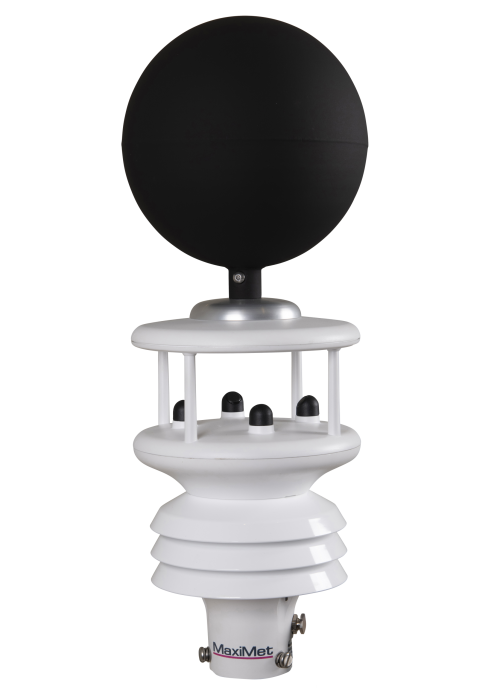

MaxiMet® GMX552 incorporates heat stress measurement into a highly reliable integrated weather station with on-board calculation of WBGT (wet bulb globe temperature), the index for heat stress.