What does the data tell us about heat risks in military training?
Heat-related illness is a growing and very real risk within military training environments. A US study from 2024 found that, except for the Space Force and Coast Guard, all other US forces recorded higher rates of heat stroke in 2024 compared to the previous year.
Heat exhaustion is also clearly on the rise. From 2020 to 2024, the number of cases went up by 52.3%, increasing every year. The Army, Marine Corps, and Coast Guard saw especially big jumps from 2023 to 2024.
These numbers show why heat stress should be considered as a safety concern, not just something that happens when training gets tough.
Military training often takes place in conditions that significantly amplify heat stress risk.
- Heavy gear: Full uniforms, body armour, and carried equipment restrict heat loss and increase metabolic strain.
- High activity levels: Running, marching, climbing, and load-bearing tasks demand sustained physical exertion.
- Outdoor exposure: Prolonged time in direct sunlight, high humidity, and limited airflow further impairs the body’s ability to cool itself.
Without effective heat stress management, these conditions can lead to dehydration, tiredness, bad judgement, and weaker physical performance, putting individuals at risk and increasing the probability accidents.
Prioritising heat safety within military training is essential to protect those who are preparing to protect others.
Is heat-related illness real?
Heat-related illness is a well-known risk in the military. While there is no doubt that training must remain realistic to prepare personnel for real missions, this shouldn’t mean personnel can be exposed to harm that can be prevented.
Cultural factors can also play a role. A “push through it” or “man up” mindset may discourage individuals from reporting early symptoms of heat stress, allowing minor issues to escalate into serious medical emergencies. That’s why education and leadership support are just as important as monitoring the environment.
Proactive heat stress management matters because it can help:
- Reduce heat related illness, minimising cases of heat exhaustion and heat stroke during training.
- Improve training outcome, maintaining performance, concentration, and decision-making under pressure.
- Increase awareness and compliance, ensuring personnel recognise symptoms early and follow heat safety protocols without stigma.
What can be done to protect military personnel?
An proactive heat stress management programme should be put it in place and it should include planned work–rest cycles, access to hydration and shade, acclimatisation programmes, and clear escalation procedures when conditions become unsafe.
It’s really important to measure environmental conditions accurately and understand what they mean. This is where understanding the difference between commonly used indices becomes important.
How does heat stress index differ from heat index and why does it matter?
The standard heat index considers air temperature and humidity to estimate how hot conditions feel to the human body. While useful for general public guidance, it does not account for key factors present in military training, such as solar radiation, wind speed, clothing, or physical workload.
The heat stress index provides a more comprehensive assessment. By incorporating radiant heat, airflow, and ambient conditions, this index offers a clearer picture of actual physiological risk.
This distinction matters because relying on simplified measures can underestimate danger, particularly during high-intensity training in full gear.
Preventing heat-related illness is not only vital for individual health and wellbeing, but also for maintaining the operational capability of armed forces operating in hot and demanding environments. Accurate measurement, informed decision-making, and a culture that prioritises safety alongside realism are essential to achieving both.
How does Gill heat stress measurement solution help?
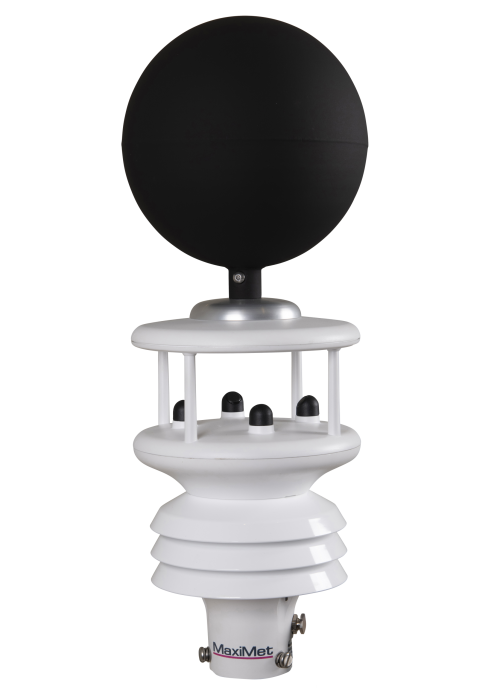
MaxiMet GMX552 is the world’s first compact weather station to integrate heat stress measurement. Developed in accordance with ISO 7243-2017, it measures black globe temperature, wind speed and direction, air temperature, humidity, and pressure calculating Wet Bulb Globe Temperature (WBGT) in real time. An optional wet bulb senor can be added for increased accuracy over in-built derived measurement.
Engineered for durability and minimal maintenance, the MaxiMet GMX552 delivers a long operational life and low total cost of ownership. The solid state sensor also collects live, auditable data, enabling informed decisions that can support proactive heat stress management programmes for the health and safety of military personnel.