


No crew on board. No margin for sensor failure.
When the vessel is autonomous, every sensor is a crew member. Gill Group builds the wind, weather and level measurement technology that USV programmes specify when the platform cannot afford downtime, and the integration cannot afford complexity.
Autonomous vessels need sensors that make decisions, not maintenance calls.
USV programmes place extreme demands on instrumentation. Sensors must survive saltwater immersion, constant vibration, temperature cycling and years of unattended operation. There is no crew to notice a degrading sensor, no engineer to replace a corroded fitting, and no tolerance for data that is plausible but wrong.
Mechanical sensors fail in exactly these conditions. Cups ice over. Bearings corrode. Floats jam. The sensor keeps reporting, but the data has silently drifted away from reality. On an autonomous platform, that is not a maintenance problem. It is a mission failure.
Gill instruments remove the mechanical weak points entirely. Ultrasonic wind measurement, solid-state level sensing and capacitive fuel monitoring all operate without moving parts. Nothing to wear, nothing to corrode, nothing to recalibrate in the field.
Saltwater and immersion
Marine-grade stainless steel, IP68 ratings and Lloyds Register Type Approval. Built for environments where corrosion is the baseline, not the exception.
True wind on a moving platform
MaxiMet Marine uses a 6-axis compass and GPS to compute true wind automatically from apparent wind, vessel speed and heading. No additional processing required.
Integration without complexity
NMEA 0183, RS232, RS422, RS485, SDI-12 and Modbus as standard. Gill sensors connect to existing navigation, autopilot and data logging systems without custom engineering.
Unattended operation
No scheduled maintenance. No moving parts to inspect. Gill sensors are designed to operate continuously for years without intervention, including in hazardous and remote deployments.
Why ultrasonic sensors are the default specification for autonomous marine
Conventional cup anemometers depend on bearings and mechanical components that degrade in saltwater environments. Salt accelerates corrosion in bearing races. Spray deposits accumulate on cup mounts. Vanes seize. The sensor does not fail cleanly — it drifts slowly, returning values that appear plausible but are no longer accurate.
Gill's ultrasonic wind measurement removes the mechanical system entirely. Time-of-flight measurement through the air requires no moving parts, no lubrication and no periodic replacement. The same principle applies to level sensing: solid-state capacitive probes with no floats, no mechanical linkages and no wear surfaces maintain accuracy across the full service life of the platform.
Wind, weather and level measurement from one UK supplier.
Every product in this range is specified for the USV operating environment: saltwater, vibration, unattended operation and integration with marine navigation systems.
Mast-mounted wind measurement for surface vessels.

WindObserver
The standard specification for marine USV masts
316 stainless steel, Lloyds Register approved, ATEX and IECEx certified. Operating from −55°C to +70°C with a heated option for polar programmes. When a reading cannot be completed, WindObserver outputs a status code rather than a corrupted value.

WindUltra
Gill's smallest and most rugged anemometer
Designed for USV platforms where space, weight and survivability are the primary constraints. Tested to IP69k including pressurised wash-down, shock and vibration. Full 0–75 m/s range in a compact mountable form factor.

WindSonic
Proven in survey, patrol and research USV fleets
Compact, lightweight, no scheduled maintenance. WMO-compliant for on-board gust measurement. The default specification for USV programmes where cost per unit and supply reliability are part of the brief.
Integrated meteorological data for autonomous operations.
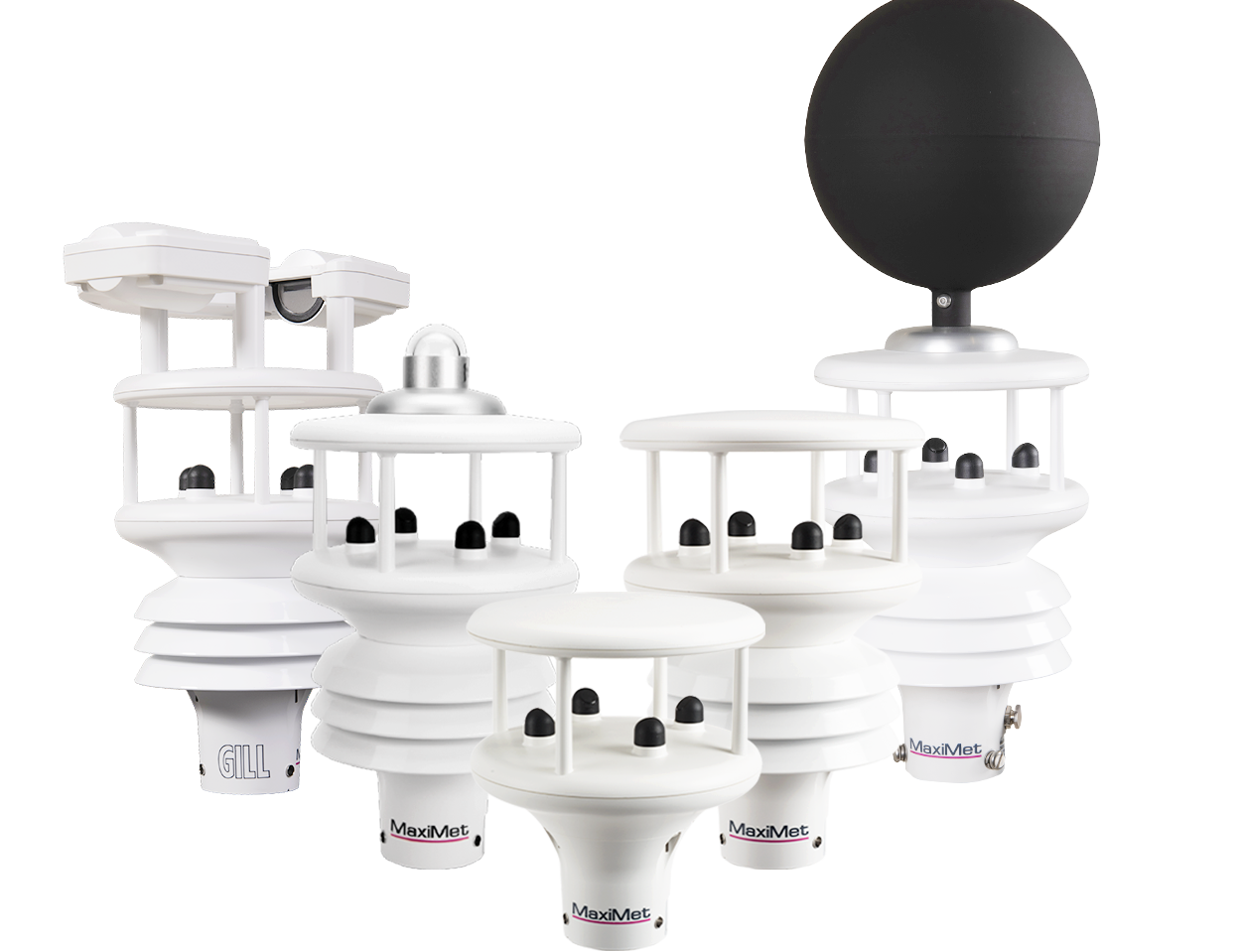
MaxiMet Marine
True wind computation on a moving platform
Wind, temperature, humidity, pressure, GPS position and heading from a single IP68-rated instrument. Used on the Mayflower Autonomous Ship and Saildrone ocean survey platforms.

MetConnect
Reference-grade modular met station
For USV programmes requiring WMO-compliant meteorological data, modular sensor configuration or integration with established oceanographic data systems. Marine-grade stainless steel construction, expandable sensor array.
Onboard fluid management and control surface monitoring.

LevelLite
Solid-state capacitive level sensing
No floats. No moving parts. Calibrated to the specific fluid type and tank geometry of the platform. IP68 rated, from 48g weight. Used in extended autonomous missions where undetected fuel loss is a mission risk.
LevelPro
Where measurement precision determines mission outcome
Higher accuracy specification for USV programmes where precise fuel consumption data informs route planning and mission duration calculations. Same solid-state technology, tighter tolerance.
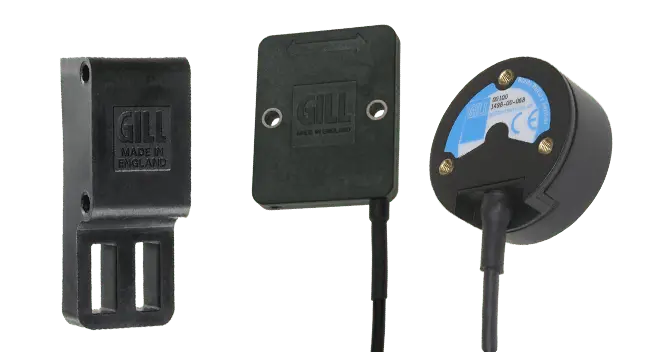
Blade Series
Non-contact position sensing for control surfaces
Non-contact induction position sensors for rudder feedback, actuator monitoring and thruster control. No mechanical wear. No drift over service life. Fully sealed against saltwater ingress.
What this looks like in the field.
Mayflower Autonomous Ship
The Mayflower Autonomous Ship crossed the Atlantic in 2022 without a crew on board, relying on Gill Instruments sensors for wind and weather data throughout the voyage. The MaxiMet Marine provided continuous meteorological data used in route optimisation and safety decision-making.
Saildrone world record deployment
Gill sensors have been specified by Saildrone for their ocean survey and wind energy measurement platforms, including the vehicle that set a world record for autonomous ocean data collection. Ultrasonic measurement provides the reliability required for deployments measured in months, not days.
Offshore DP and station-keeping systems
Gill WindObserver is specified as the wind input sensor for dynamic positioning systems on offshore vessels and platforms, including Lloyd's Register approved applications. The DP system depends on accurate, continuous wind data for station-keeping calculations. Sensor failure is not an acceptable outcome.
Unmanned surface vessels for defence programmes
Gill sensors are used in naval and defence USV programmes across multiple nations. The combination of ATEX certification, Lloyds Type Approval and UK sovereign manufacturing makes Gill the default specification for defence-programme procurement where supply chain provenance matters.
Designed to connect without custom engineering.
USV integration budgets do not have room for sensor middleware. Gill instruments output standard marine protocols from the factory, including NMEA 0183 — the language that autopilots, navigation computers and data loggers already speak.
Free configuration software supplied with every instrument allows output rate, data format and communication protocol to be set before the sensor is installed. No additional software licence. No integration consultant.
For programmes using ROS, serial-to-ROS drivers are available from the open-source community. Gill provides data format documentation and sample output strings to support integration from the outset of any programme.
View downloads and documentation →NMEA 0183
Standard marine navigation protocol. Compatible with autopilots, AIS, chart plotters and most USV control systems out of the box.
Modbus RTU
Industrial control standard. Connects directly to PLCs, SCADA and mission management systems without protocol conversion.
SDI-12
Environmental sensor standard. Used in oceanographic and environmental research data logging systems worldwide.
RS232 / RS422 / RS485
Serial standards for point-to-point and multi-drop configurations. Supported natively without adapters.
Specifying sensors for USV programmes.
Ultrasonic sensors have no moving parts. No cups to ice over, no bearings to corrode in saltwater, no mechanical components to degrade over an extended autonomous deployment. Gill sensors also output a status code when a reading cannot be completed rather than returning a corrupted value — important on a platform where no one is watching the data in real time.
MaxiMet Marine uses a 6-axis compass to measure pitch, roll and heading on every reading, and combines that with GPS speed and course over ground to compute true wind from apparent wind automatically. No additional correction software is required. The true wind output is available directly on the NMEA data stream.
WindObserver carries Lloyds Register Type Approval for marine and offshore applications, and is also certified to ATEX and IECEx for hazardous atmosphere installations. MaxiMet Marine is rated to IP68 and tested to IEC 60945 for marine EMC. WindSonic and WindUltra are available with IP66 and IP68 protection ratings respectively.
Yes. Gill sensors output NMEA 0183 which is compatible with most marine autopilot and navigation systems natively. For ROS integration, serial-to-ROS drivers handle the protocol conversion. Gill provides data format documentation and sample output strings to support integration from programme inception.
LevelLite and LevelPro use solid-state capacitive technology with no moving parts, calibrated to the specific fluid type and tank geometry of the platform. Probes are specified to the millimetre and available in custom lengths, angles and mounting configurations for non-standard tank geometries. IP68 rated, from 48g total weight.
Yes. Gill sensors are used in naval and defence USV programmes across multiple nations. UK sovereign manufacturing, ATEX and Lloyds approvals, and long product lifecycles make Gill the default specification for defence procurement where supply chain provenance and long-term support matter.
Gill is not a systems integrator and does not supply complete USV platforms. What we supply is the precision instrumentation at the core of the system: wind sensors, weather stations, level sensors and position sensors. We support integration from programme inception, including documentation, configuration software and direct engineering support.
No scheduled maintenance on the sensors themselves. No moving parts means no mechanical wear, no bearing replacement and no recalibration triggered by component degradation. Gill recommends periodic visual inspection and cleaning as part of general vessel maintenance, but there are no sensor-specific maintenance intervals.
Yes. WindObserver is rated to −55°C and is available with a heated transducer option for icing conditions. MaxiMet Marine and WindUltra are rated to −40°C. Gill sensors have been deployed in Arctic and Antarctic research programmes on both crewed and uncrewed platforms.
Six reasons USV programmes specify Gill.
Proven in headline deployments
Mayflower Autonomous Ship. Saildrone world record. Lloyd's Register approved DP systems. The reference list speaks for itself.
Marine-grade from the ground up
Lloyds Register Type Approval, IP68, 316 stainless steel, IEC 60945 EMC. Not adapted for marine — designed for it.
No moving parts across the range
Ultrasonic wind, capacitive level, inductive position. Nothing to corrode, ice over or wear out in service.
True wind computation built in
MaxiMet Marine handles the motion compensation internally. No additional processing hardware or software required on the platform.
Full group capability from one supplier
Wind sensors, weather stations, level sensing, position sensing, R&D consultancy and UKAS-accredited calibration. One point of contact for the sensor package.
UK sovereign manufacturing
Designed and built in Lymington, Hampshire. For defence and government programmes where supply chain provenance is a procurement requirement.