TruMet Infared Optical Rain Gauge | Gill Instruments Skip to content
Rainfall network modernisation

Your infrastructure is not the problem. Your rainfall data is.

The data starts with the sensor. For decades, tipping buckets have been the default choice for rainfall measurement. But as networks demand greater accuracy, lower maintenance and more reliable performance, the sensor itself is coming under greater scrutiny. The question is no longer what measures rainfall. It's what measures it best for your network.

King's Award for Enterprise
01
Solid-state optical sensing
No tipping mechanism to block, freeze or drift
02
Drop-in retrofit
Tipping bucket signal emulation. Existing logging, telemetry and integrations continue as expected.
03
Data continuity
Tipping bucket pulse output emulation as standard
04
Zero annual maintenance
No moving parts means no scheduled replacement programme
The case for change

Systematic undercatch. Growing scrutiny.

Tipping bucket gauges became the industry standard because they were simple, affordable and reliable enough for the data demands of an earlier era. They remain the backbone of many rainfall monitoring networks. Increasingly, however, they are being asked to meet expectations they were never designed to satisfy.

The limitations are well understood. Mechanical gauges can systematically undercatch rainfall, particularly in challenging weather conditions. As data requirements become more demanding and scrutiny around measurement quality increases, the gap between what networks need and what legacy sensing technologies can consistently deliver is becoming harder to ignore.

The industry conversation is beginning to shift. The question is no longer whether solid-state sensing technologies will play a greater role in rainfall monitoring. It is how operators modernise existing networks while balancing performance, cost and operational continuity.

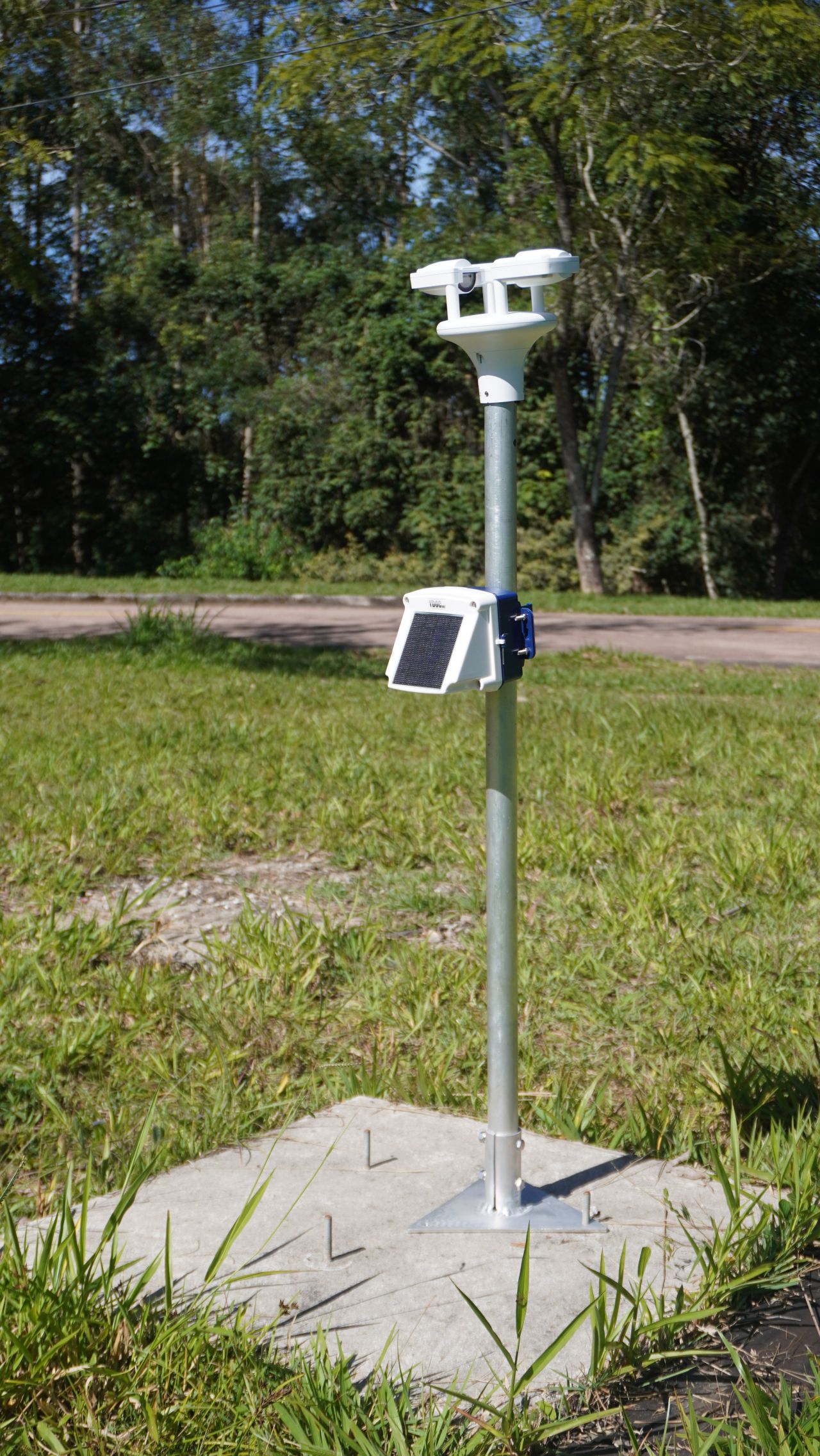
TruMet PW100 deployed at a rainfall monitoring site
Know what you need

Two upgrade paths. Two right answers.

Two very different conversations are shaping the future of precipitation sensing. Treating them as interchangeable is one of the quickest ways to end up with the wrong sensor.

Research and synoptic networks

Scientific capability

Research stations and national synoptic networks have genuine reasons to invest in advanced optical sensing. These deployments require expanded measurement parameters, higher data granularity and capabilities that go well beyond operational network requirements.

That investment is justified by the science. It also comes with a cost structure and procurement complexity to match.

Operational networks at scale

Operational deployability

Most rainfall monitoring networks in operation today are mature. Sites exist, masts are installed, power and telemetry are provisioned, data pipelines are established, audit trails are documented.

These teams are not in the market for an architectural reset. They need a low-friction upgrade that preserves existing infrastructure investment while removing the operational burden of mechanical sensing.

The retrofit solution

TruMet PW100

Modernise the sensor, not the network. TruMet PW100 delivers solid-state optical rainfall sensing while preserving the infrastructure, workflows and data pipelines already in place.

Sensing

No moving parts

Infrared optical sensing eliminates the tipping mechanism entirely. No funnel blockages, no pivot wear, no calibration drift. Reliable from light drizzle to extreme downpours.

Install

Single-visit retrofit

Identical pulse output for direct tipping bucket replacement. Existing logging, telemetry and integrations continue to operate as expected. One site visit to commission. No procurement rework.

Data

Pulse output emulation

Emulates tipping bucket pulse output to preserve data pipeline integrity. Long-term climate records and regulatory reporting continue without recalibration.

Economics

Right-sized capability

Accumulation measurement at high reliability. No drop size distribution, no reflectivity factor Z. The capital difference funds the next ten monitoring points.

TruMet PW100 optical rain gauge
Ready to modernise your network?

Tell us about your existing infrastructure and we will recommend the right path forward.

The density question

Capability should follow purpose

Not every network needs every capability. Many operational rainfall networks simply require reliable accumulation measurement. Paying for functionality that never influences an operational decision comes at a cost.

The capital invested in over-specified sensors is capital that cannot be invested in greater coverage. Often, a broader network with more monitoring points will deliver more useful operational insight than a smaller network built around capabilities that remain unused.

Density is an economic question as much as a scientific one. The strongest networks match sensing technology to the application, infrastructure and operational realities of the organisation. Not because it creates a better specification sheet, but because it delivers better data where it matters.

Editorial

Modernising rainfall networks: why the upgrade decision is decided by what's already in the ground

Full analysis of the transition in precipitation sensing, the hidden costs of architectural change, and why the retrofit path delivers for most operators.

Read the article
Where it deploys

Operational across flood monitoring, rail and transport networks.

01

Flood and catchment monitoring

Deployed across flood warning networks, river gauging stations and catchment monitoring programmes. Reliable measurement in the high-intensity events that matter most.

02

Rail and transport infrastructure

Rainfall monitoring for trackside operations, road network management and bridge safety. Solid-state sensing reduces the maintenance burden on remote infrastructure sites.

03

Environmental monitoring networks

Automated weather station networks, climate monitoring and environmental data collection. Long-term unattended deployment with no planned maintenance schedule.

Masterclass

TruMet PW100 Masterclass

Join Tanya Thorne, CMO, and Greg Koch, Product Manager, as they discuss the realities of rainfall measurement in operational environments and introduce the TruMet PW100 Infrared Optical Rain Gauge.

The session will include
  • The challenges of rainfall measurement
  • Traditional methods vs optical sensing
  • Introducing the TruMet PW100
  • Real-world applications and performance
  • Live Q&A
Session 1
10 June
3pm BST
Register here
Session 2
11 June
7am BST
Register here
Common questions

Frequently asked questions

Common questions from network operators and system integrators. If yours isn't covered, ask our team directly.

Can I directly replace a tipping bucket in the field?

Yes. The PW100 provides an identical pulse output for direct tipping bucket replacement. The tip size is set to 0.1mm, so if your existing gauge uses a different tip size, a small datalogger adjustment is required to align.

Is field calibration or configuration needed?

No configuration is required before use or after installation. There is no setup needed from the factory. No field calibration is required, and test data to date has not identified any calibration drift requiring ongoing attention.

What is the maintenance routine?

Requirements vary by environment. Sites with high dust, sand, pollen or coastal airborne debris may need more frequent lens cleaning. The unit internally compensates for gradual lens contamination by increasing LED power to maintain constant receiver intensity. Periodic cleaning is recommended as a precaution.

Can it be left out over winter?

Yes. The PW100 is rated to operate at -35°C and can remain installed year-round. It is designed for liquid precipitation only and there is no heater to remove snow buildup, so data will not be collected during frozen precipitation events.

How does it differ from the rain indicator on older GMX sensors?

The PW100 and GMX603 have a stated accuracy of ±5% and are designed as quantitative tipping bucket replacements. The optical sensor on the GMX240, GMX400 and GMX600 has no accuracy specification and is intended only for applications requiring a rain present / rain absent indication.

Does the sensor need a specific orientation?

Yes. The TruMet includes a direction marker to eliminate the risk of the receiver being flooded by direct sunlight. In the northern hemisphere, point the direction marker east. In the southern hemisphere, point it west.

What communications options are available?

The PW100 provides pulse output only, designed as a direct tipping bucket replacement. For users needing digital communications including SDI-12, the MaxiMet GMX603 integrates the same optical precipitation sensing alongside full weather station output and supports all GMX600 communication protocols.

Discuss your network

Speak to our rainfall monitoring specialists

Get practical advice on sensor selection, network design and deployment considerations based on your specific operational requirements.