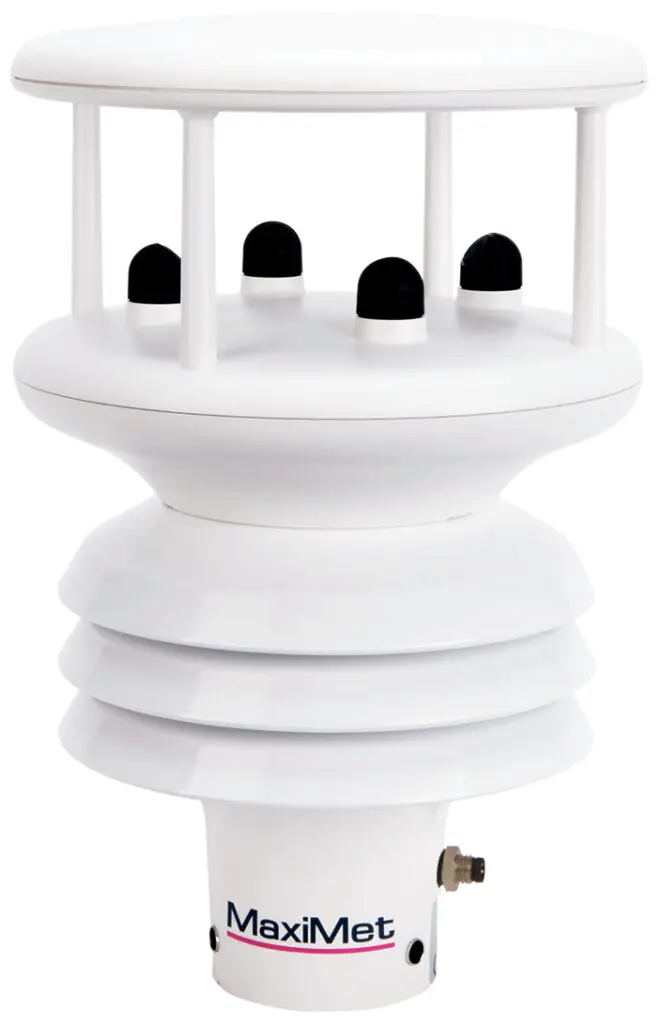
Government and emergency applications
- Air quality monitoring - Effective air quality management relies on understanding how pollutants form and disperse. Monitoring systems use sensors that measure wind speed and direction, temperature and humidity to support local and national policy development.
- Environmental and pollution control - Accurate measurement of key atmospheric parameters helps authorities assess pollution levels, identify sources and develop targeted management strategies. Multi-parameter monitoring provides the data needed to make informed regulatory decisions.
- Environmental research - Studies often take place in both fixed and remote locations, so sensors must offer flexible mounting options, whether on building-mounted poles or portable tripods. Measuring wind, temperature, humidity and other parameters is essential for detailed analysis, including plume modelling and environmental assessments.
- First response environmental analysis - During emergencies, such as fires or incidents involving airborne contaminants, real-time environmental data is vital. Live measurements allow first responders to model plume movement, assess risk and decide on the safest and most effective course of action.
Application notes
- Advancing fire weather research: testing ultrasonic wind sensors in the field
- Air Quality monitoring
- MaxiMet weather stations integrate with Aethalometer® for accurate black carbon (PM2.5) pollution monitoring
- Meteorological instruments for data capture in pollution and environmental studies
- Meteorological instruments for hazmat and emergency weather stations
- Meteorological instruments for local authority air quality monitoring systems
- WindUltra ultrasonic anemometers maintain high accuracy measurement under extreme dust and blown sand conditions