GILL INSTRUMENTS: TRUSTED GLOBALLY IN METEOROLOGICAL SENSING
Main Menu

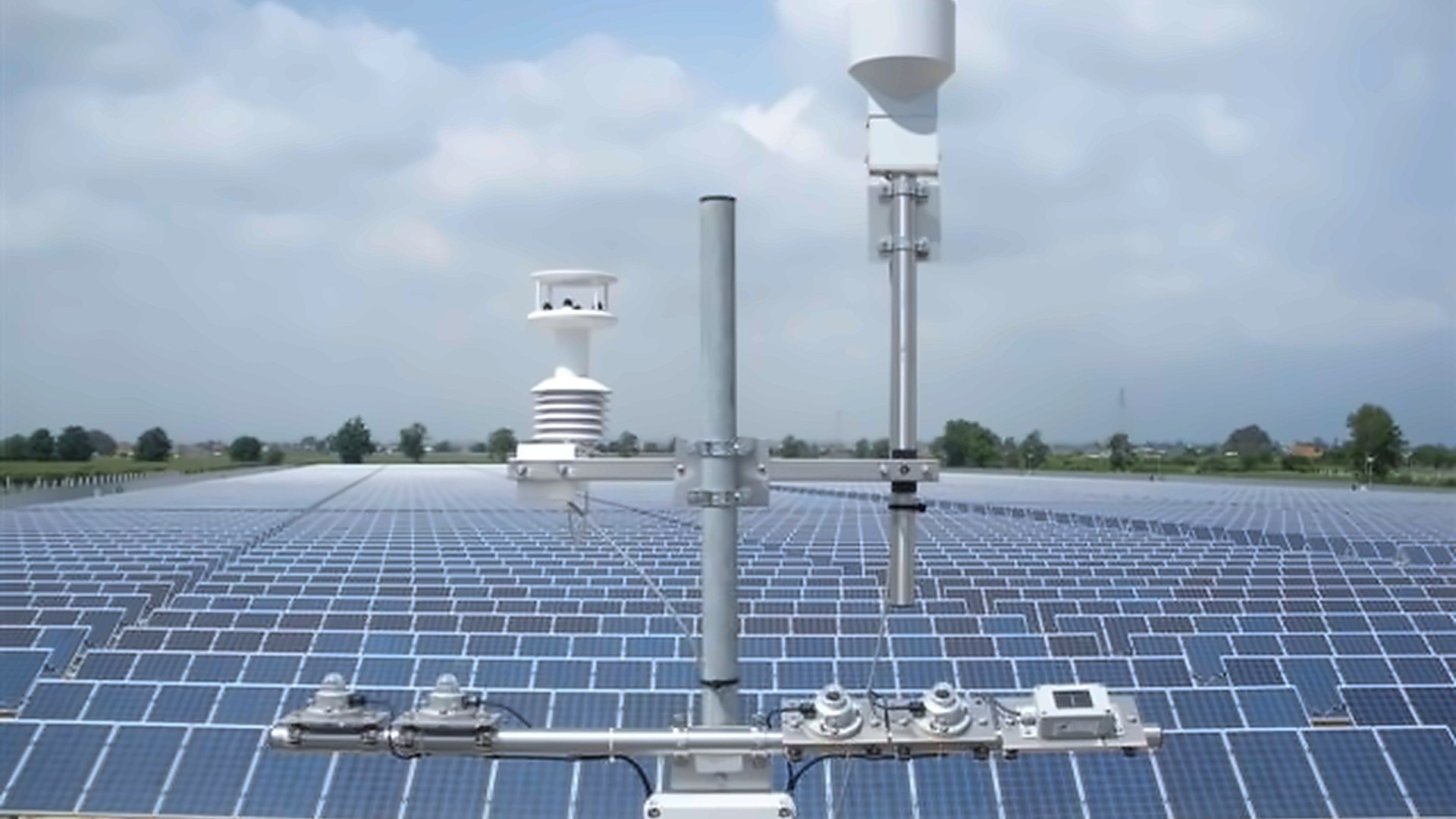
When your automatic weather station gives you unreliable readings, everything downstream suffers: wrong decisions, failed audits, missed alerts. The instrument at the centre of your weather station needs to be right first time and stay right.
An automatic weather station can measure everything you need from one setup and send the data back without anyone on site. Wind. Temperature. Humidity. Pressure. Precipitation. Solar radiation. All very tidy, and all captured from a single installation in places that are often awkward, remote or unforgiving.
Which is exactly why the instrument inside matters so much. Because if the core sensor is not up to the job, the rest is just a tidy housing around a future problem.
And these stations do not live easy lives. They are out on offshore platforms, up mountain passes, across remote farmland, and mounted on wind turbines where no one wants a maintenance headache. In those environments, a mechanical sensor is not just old fashioned. It is a weak link waiting for its moment.
Cups freeze. Bearings wear. Vanes seize. Worse still, mechanical sensors do not always fail properly. They just drift into being wrong. Quietly. Which means the danger is not only downtime. It is false confidence.
Ultrasonic measurement means no moving parts. Fewer site visits. Less maintenance drag. More confidence in the data coming back.
Wind, pressure, temperature, humidity, precipitation and solar radiation, all delivered as a single clean data output in the protocol your system already expects. No patchwork. No unnecessary faff.
IP66 and IP68 rated. Heated variants down to -40°C. Stainless steel options for marine environments. WindObserver is also ATEX and IECEx certified for hazardous areas. Hardware built for real-world punishment, not lab-bench comfort.
RS232, RS422, RS485, SDI-12, MODBUS and NMEA outputs. Connects with existing data loggers, SCADA platforms and telemetry systems without turning integration into an engineering project.
Conventional cup anemometers depend on bearings, mechanical components and regular calibration checks. In cold or exposed environments, cups ice over, bearings wear and vanes seize. The sensor does not announce that it is failing. It just returns values that drift further from reality over time, and the data logger dutifully records every one of them.
Gill's ultrasonic technology removes that weak link altogether. No cups. No vanes. No moving parts. No mechanical wear. Just precise acoustic measurement designed to keep delivering dependable data in harsh environments, year after year.
Both are built on 40 years of ultrasonic measurement experience. Both are trusted in automatic weather stations around the world. The difference is not in the quality. It is in the configuration your installation calls for.
Complete multi-parameter station in a single compact unit
GPS, wind, temperature, humidity, pressure, precipitation, solar radiation and more, all from one low-maintenance installation. MaxiMet Marine adds a 6-axis compass and an IP68 rating for accurate wind data on moving platforms.
Professional-grade station built for WMO compliance
A modular, expandable weather station built to support WMO siting recommendations. Suited to national met service networks, research stations and applications where a configurable, professional-grade installation designed for a long service life is the requirement. Marine-grade stainless steel construction, user-replaceable pressure sensor, user-replaceable temperature/humidity probe.
MaxiMet is the right choice when you need a self-contained, easy-to-deploy unit with minimal integration work. MetConnect suits larger installations and professional networks where modularity, WMO compliance and long-term expandability are the brief.
For applications where accuracy is non-negotiable
The specification for applications where measurement accuracy and sensor integrity are non-negotiable. 316 stainless steel, Lloyds Register approved, operating from −55°C to +70°C with a heated option. When a reading cannot be completed in extreme conditions, WindObserver outputs a status code rather than a corrupted value.
Gill's smallest and most rugged anemometer
Designed for applications where space, weight and survivability are the constraints. Tested to IP69k including pressurised wash-down, shock and vibration. Full 0–75 m/s measurement range in a form factor built for demanding installations.
Cost-effective reliability at scale
When the priority is cost-effective, fit-and-forget reliability across a monitoring network, WindSonic is the sensor that has earned its place. Compact, lightweight, WMO-compliant for on-board gust measurement, no scheduled maintenance. UK CAA and FAA accepted as part of an automatic weather observing system.
National met services and research institutions cannot afford a station that quietly drifts out of calibration. MetConnect is built to support WMO siting recommendations, while MaxiMet suits networks where compact, reliable nodes still need to pull serious weight.
You cannot keep sending people up turbine towers to check whether a sensor is still behaving itself. Wind farm operators and solar developers choose Gill because ultrasonic measurement does not degrade through moving-part wear, and maintenance stays low.
Salt. Spray. Motion. Corrosion. The sea has a talent for exposing weak equipment early. MaxiMet Marine models are rated to IP68, with GPS and a 6-axis compass supporting accurate wind data on moving platforms, and materials chosen to cope with harsh marine conditions.
Transport and infrastructure depend on meteorological data for critical and economic decisions. Road maintenance teams rely on it. Bridge and runway operators do too. A false alert wastes time and money. A missed alert can cost far more.
Hazardous area monitoring, chemical dispersal risk assessment, heat stress measurement for outdoor workers, and tactical weather for military operations all rely on dependable measurement. ATEX and IECEx certified options available.
Urban heat island monitoring, precision irrigation and smart building management all need accurate data with minimal power demand. MaxiMet's low-power Eco Mode makes solar and battery-powered deployment possible, without compromising measurement quality between site visits.
Gill is not a systems integrator, and we do not supply complete weather station installations. What we do supply is the precision instrument at the core, the part that determines whether the data coming out is dependable or dubious.
Share the application details with us: site conditions, parameters required, siting constraints, output format, power budget and any environmental certification needs. From there, we will guide you to the right instrument, along with the correct options and practical integration support.
Free configuration software, full documentation and direct support from our engineering team when you need it. Not a ticketing queue. Actual engineers who know the products.
MaxiMet is a vertically-integrated all-in-one weather station. Everything you need: wind, temperature, humidity, pressure, precipitation and solar radiation, all built into a single compact unit. Designed for straightforward deployment: mount it, connect it, configure it.
MetConnect is a modular platform intended for professional networks and larger installations. It supports WMO siting recommendations, accommodates a wider range of sensor configurations and is designed to be expanded over time.
The honest answer is maintenance. Cup anemometers have bearings that wear, vanes that seize and cups that ice over. In demanding or remote environments, these are not theoretical failure modes.
Gill's ultrasonic sensors have no moving parts. There is nothing to wear, nothing to ice over and nothing to replace on a schedule. The measurement principle also responds faster to gusts and does not underestimate wind speed at low velocities the way cup anemometers can.
Yes, and in most cases without any custom engineering. Gill sensors support RS232, RS422, RS485, SDI-12, MODBUS and NMEA outputs as standard. Free sensor configuration software is provided, allowing output format, update rate and protocol to be set before deployment.
Yes. WindObserver IS is available in intrinsically safe variants certified to IECEx, ATEX and UKEX for installation in explosive atmospheres.
MaxiMet Marine uses a 6-axis compass to measure pitch, roll and heading on every reading, then combines that with GPS speed and course over ground to compute true wind automatically. No additional processing. No separate correction software.
No moving parts means no mechanical wear and no recalibration triggered by bearing or cup degradation. This minimises maintenance and reduces lifetime ownership costs.
Building ultrasonic wind instruments in the UK since 1984.
Met services in 150 countries choose Gill when the data has to be right.
Ultrasonic measurement removes the weak link from the weather station.
Products that support IP66 and IP68 ratings. Heated variants to −55°C. ATEX and IECEx certified.
RS232, RS422, RS485, SDI-12, MODBUS and NMEA as standard.
All Gill instruments designed and built in Lymington, Hampshire. King's Award for Enterprise.
Fill in your details below and our team will get back to you as soon as possible. If you can include site conditions, parameters required and any certification needs, we can respond with a specific recommendation faster.
* required field