Safeguarding athletes and audiences in extreme conditions
While Italy prepares to host the 2026 Winter Olympics, the opposite side of the world is welcoming elite tennis players to the first Grand Slam of the year in Australia. For the 2026 tournament, organisers at the Australian Open and the ATP have introduced updated measures to protect players during periods of extreme heat.
These include 10-minute cooling breaks, which can be requested after the second set or enforced when on-court temperatures reach 30.1°C or above. Play may also be suspended entirely when the Wet Bulb Globe Temperature exceeds 32.2°C. Together, these changes reflect a growing recognition that heat stress is a serious risk that needs to be managed, not endured.
Lessons from past tournaments
This recognition has not come quickly. In 2014, a four-day heatwave during the tournament led to a record number of player withdrawals. A ball boy collapsed, one player was sick on court, and even water bottles softened under the heat. At the time, organisers were criticised for being ill-prepared and for a lack of transparency around when heat policies would be enforced.
Players voiced frustration that decisions were left entirely to the discretion of the umpire, rather than being triggered by clearly defined environmental thresholds. The experience highlighted how subjective judgement alone is not enough when dealing with extreme heat.
A science-led approach to player safety
A key turning point came in 2017 with the appointment of Carolyn Broderick as chief medical officer for Tennis Australia and the Australian Open. Drawing on years of experience working with elite athletes, Dr Broderick made the revision of the heat policy a priority.
According to news reports, she co-developed a method to assess the real-time risk of athletes developing heat stroke. Her position has been clear. Future heat policies must be rooted in science and supported by objective data, not intuition alone.
Heat risk does not stop at the court boundary
Extreme heat does not only affect those competing. Spectators are equally exposed, often for long periods with limited shade or airflow.
During the 2025 Wimbledon semi-final, play was halted twice within five minutes to assist spectators who had fallen ill in the stands due to high temperatures. The incident at the Wimbledon Championships highlighted how heat stress management is a concern for both athlete AND spectators welfare alike.
When organisers fail to plan for heat, the result is not only health risks but also disrupted play and a diminished experience for everyone involved.
Better preparation means better performance and enjoyment
A proactive heat stress management programme benefits all parties. Athletes are better able to perform at their peak, with reduced risk of heat-related illness or withdrawal. Spectators are less likely to suffer avoidable medical incidents and can enjoy higher-quality competition.
The common factor is preparation. Clear thresholds, real-time monitoring, and evidence-based decisions allow organisers to act early rather than react to emergencies.
Measuring heat stress in real-time - Gill heat stress measurement solution
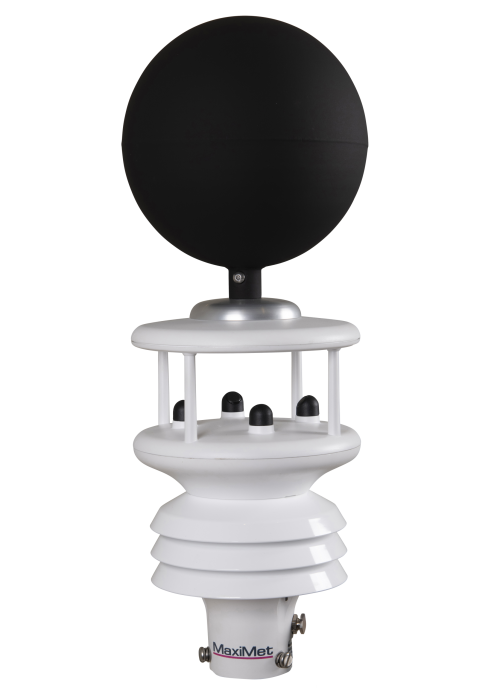
For organisers looking to move from policy to practice, accurate measurement is essential. MaxiMet GMX552 is the world’s first compact weather station to integrate heat stress measurement. Developed in line with ISO 7243-2017, it measures black globe temperature, wind speed and direction, air temperature, humidity, and pressure to calculate Wet Bulb Globe Temperature (WBGT) in real time. An optional wet bulb senor can be added to further improve accuracy beyond derived measurements.
Designed for durability and minimal maintenance, the MaxiMet GMX552 provides long operational life and a low total cost of ownership. Its solid-state sensors deliver continuous, auditable data, supporting informed decisions and enabling proactive heat stress management programmes that protect both athletes and spectators.
Resources
- ATP introduce new heat policy beginning from 2026
- Australian Open to feature altered extreme heat policy after scalding summer – ABC News
- The Australian Open revamped its heat policy seven years ago. How does it work? – ABC News
- Wimbledon semi-final stopped twice in five minutes for crowd emergencies | The Independent