












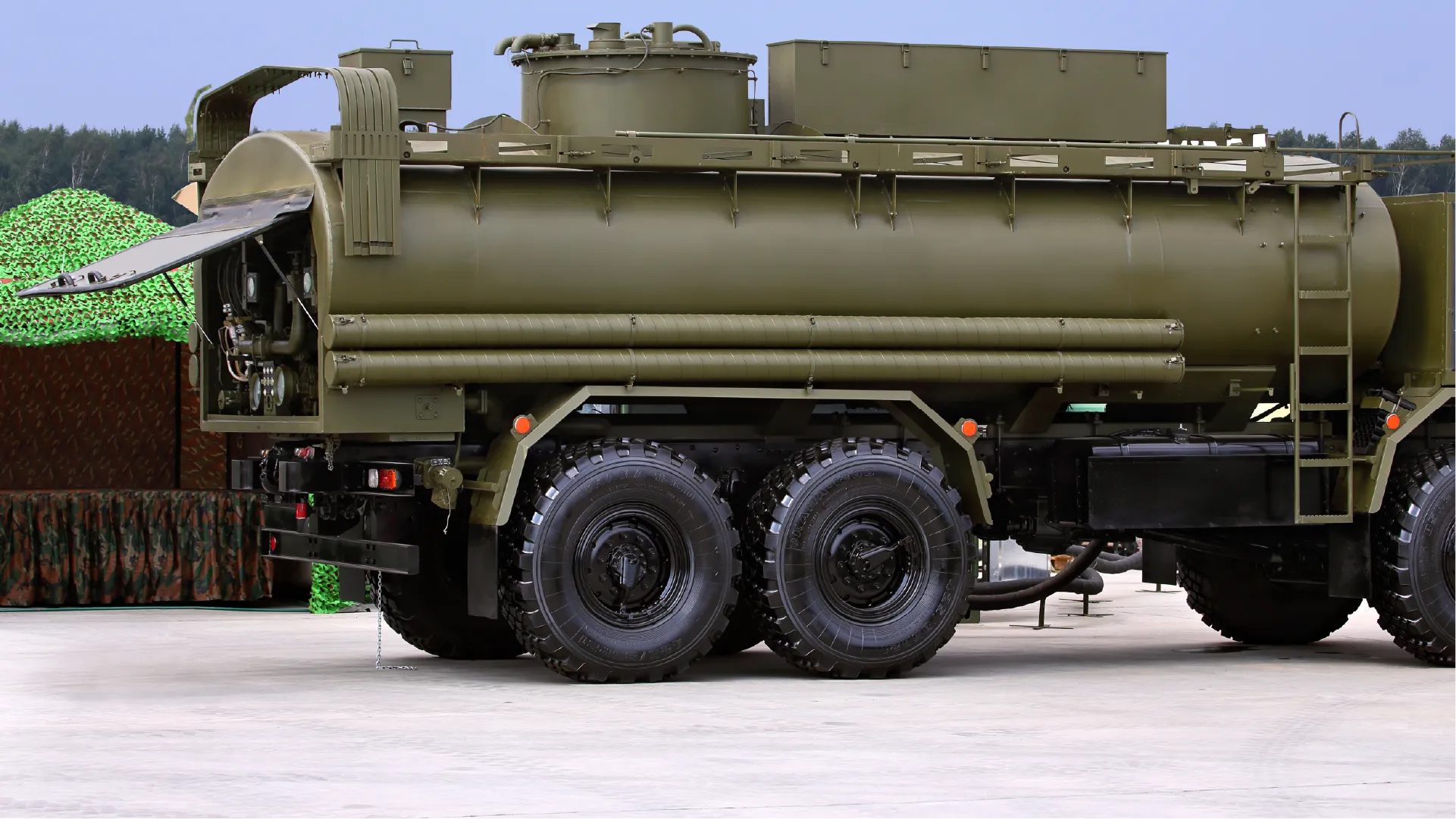
From the tanker to the standby generator
Know exactly how much diesel is in the tank, whether it feeds an excavator, a locomotive or the standby generator that has to start first time. Gill capacitive diesel level sensors measure continuously along the probe, with no moving parts in the sensing mechanism, delivering dependable level data for plant, vehicles and power systems working in demanding conditions.
Standby power is only as good as the fuel behind it
A standby generator may run for a few hours a year, but when it is needed the tank has to hold what the records say it holds. Site plant, rail traction and marine craft have the opposite problem: hard daily use, vibration and fuel bought, moved and sometimes stolen in bulk. A level reading that sticks or steps undermines both refuelling plans and fuel accounting.
Fuel management needs a number. Telematics and fuel management systems work from a continuous signal. A float that reads in steps leaves gaps that are hard to reconcile against deliveries.
Diesel tanks collect water and sediment. Diesel that sits for long periods gathers water and deposits. A sensor with no moving parts has nothing to gum up, though water at the bottom of a tank still changes what any level sensor sees, so tank housekeeping matters.
Your liquid.
The right fit.From tank dimensions to output and supply voltage, share the details and our engineers will help you find the sensor configuration that fits.
Dependable diesel level measurement, without the moving parts
Diesel tanks rarely get an easy life. Site plant shakes, locomotives vibrate for hours and standby tanks sit for months before they are needed, and float gauges can stick, wear or report in steps when it matters most.
Gill capacitive diesel level sensors take a different approach, measuring diesel continuously along a probe rather than relying on a float to indicate the level. As the diesel rises or falls, the balance between diesel and air around the probe changes its capacitance. The sensor converts that change into a diesel level reading that can be sent to a controller, telematics unit or display. With no float, arm or reed switch in the measurement mechanism, there are fewer mechanical components to stick or wear, and the fully sealed electronics support use in demanding operating environments.
Continuous measurement. Track diesel level along the probe, capturing consumption, deliveries and unexpected drops rather than relying on discrete switching points.
Calibrated for the application. Factory calibration is matched to the probe length and intended application, helping deliver a diesel level reading suited to the tank being monitored.
Outputs to suit your system. Depending on the model, choose from 0 to 10 V, 4 to 20 mA, RS232 or CAN for integration with controllers, displays and telematics systems.
Not all diesel level sensors see the tank the same way
Some measure down to the surface. Others follow a float. Gill capacitive diesel level sensors take a different approach, measuring continuously along a probe immersed in the diesel. That distinction matters when you’re choosing a sensor for plant, generator, rail or marine tanks, where vibration, fuel movement and the accuracy you need all influence which technology makes sense.
| Method | Our approachGill capacitive | Radar | Ultrasonic | Float or reed switch |
|---|---|---|---|---|
| How it reads the level | Reads the change in capacitance along a probe in the liquid | Times a microwave pulse reflected off the surface from above | Times a sound pulse echoing off the surface from above | A float rides the surface and moves an arm, stem or switch |
| Moving parts | None | None | None | Float and pivot or stem |
| Foam on the surface | Measures the liquid along the probe, not the top of the foam | Heavy foam can weaken the echo | Foam can absorb the echo | The float can sit on the foam |
| Vibration and slosh | Continuous signal the receiving system can average | A moving surface can scatter the echo | A moving surface can scatter the echo | The float swings and the reading jumps |
| Small or cramped tanks | One compact probe through a single fitting | Needs headroom and a clear beam path | Needs headroom for its dead zone | Needs room for the float to travel |
| Shaped tanks | Calibrated against the tank profile | Set up for the vessel geometry | Set up for the vessel geometry | Arm geometry limits accuracy |
| Watch out for | Calibration to the liquid, and a probe matched to conductive or fouling liquids | Weaker echoes from low-dielectric liquids such as fuels and oils, false echoes from internal structures, size and cost | Vapour, condensation, temperature layers and internal obstructions | Sticking, wear, deposits and readings in steps |
| Where it fits best | Vehicle, plant, marine, UAV and machinery tanks | Large storage tanks and process vessels | Open tanks, sumps and channels with a calm surface | Simple, low-cost tanks and alarms |
Why engineers choose Gill capacitive
- Nothing moves, so nothing sticks, wears or fouls
- Reads the liquid, not the foam or the ripple on top
- One compact probe that fits tanks other methods cannot
- Calibrated to the liquid and to the shape of the tank
If your vessel is better served by a non-contact method, our engineers will say so plainly.
Engineered for tanks that don’t fit the mould
Diesel tanks are shaped around chassis rails, generator skids and machinery, not designed as neat rectangles. That makes accurate diesel measurement more complex: the same change in diesel height can represent very different changes in volume, depending on the tank’s geometry. Gill level sensors can be configured to account for the tank’s shape, translating measured level into a more meaningful indication of how much diesel it contains.
Tank profiling across the range. GSLevel, Gill’s configuration software for its liquid level sensor range, includes tank profiling to support volumetric output rather than height alone.
Profile it your way. Use the configuration wizard or upload a CSV file describing the tank’s cross-section.
Calibrated to your tank. LevelDefend and custom level sensors can be calibrated to the customer’s tank geometry, helping deliver diesel level measurements suited to the installation.
Which diesel level sensor suits your tank?
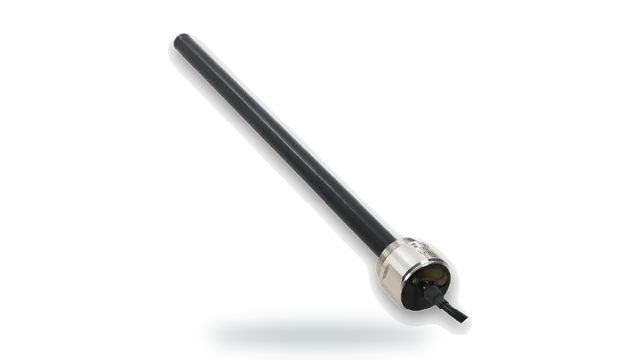
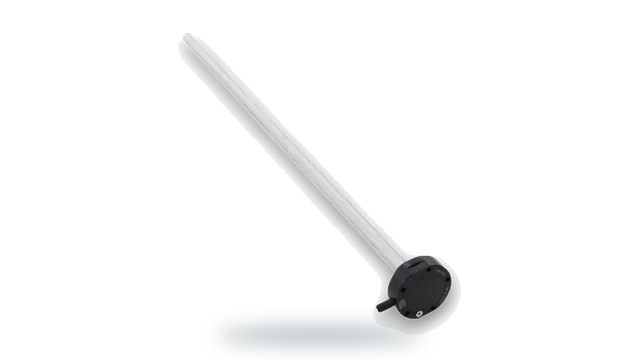
LevelPro is the starting point for diesel tanks on plant, generators, rail and marine craft. LevelDefend covers military vehicles, and the DD1615 display gives a readout where there is no controller.
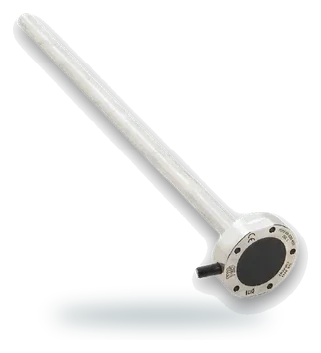
LevelPro
Best for general fuel, oil, water and coolant tanks
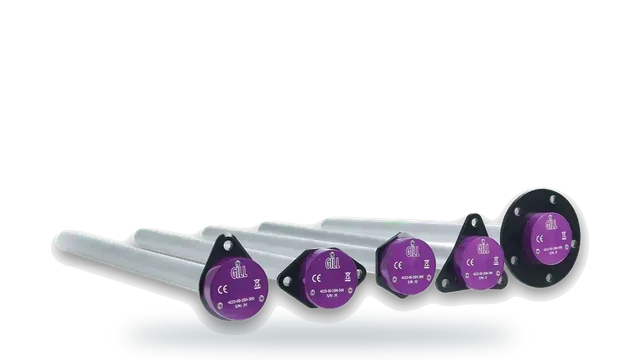
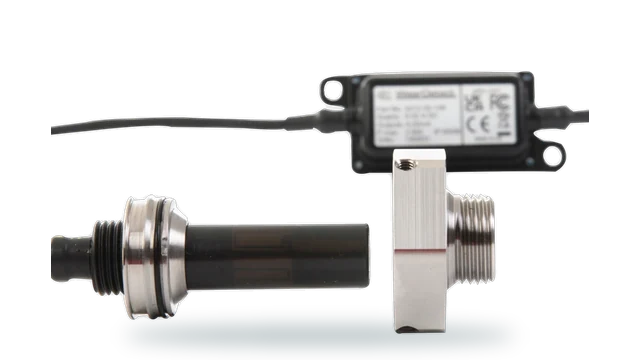
LevelPro is the general-purpose sensor in the Gill range, built in corrosion-resistant stainless steel and fully sealed. It measures fuel, oil, water and other liquids continuously in vehicles, tanks and industrial equipment, with 0 to 10 V or 4 to 20 mA output and RS232 for configuration.
- Stainless steel
- IP66 and IP68
- 0 to 10 V
- 4 to 20 mA
- RS232
- Tank profiling
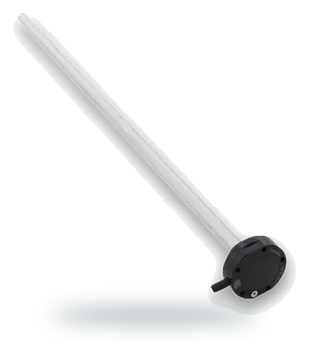
LevelDefend
Best for military vehicles and craft
LevelDefend is a military-grade level sensor in 6082 T6 anodised aluminium, solid-state and environmentally sealed, tolerant of shock and vibration and designed for low EMC. Outputs and calibration follow the customer’s requirement, so each build is specified with the vehicle or vessel team.
- 6082 T6 aluminium
- Shock and vibration tolerant
- Low EMC
DD1615 level display
Best where there is no controller to read the signal
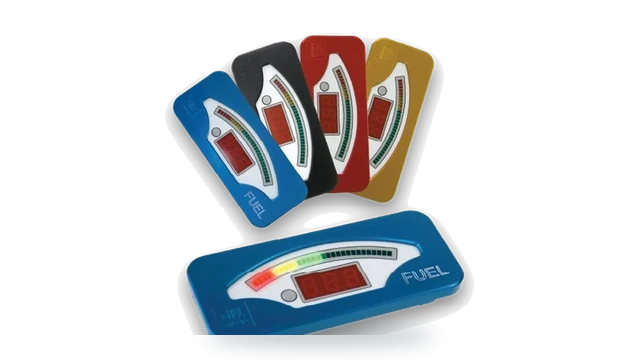
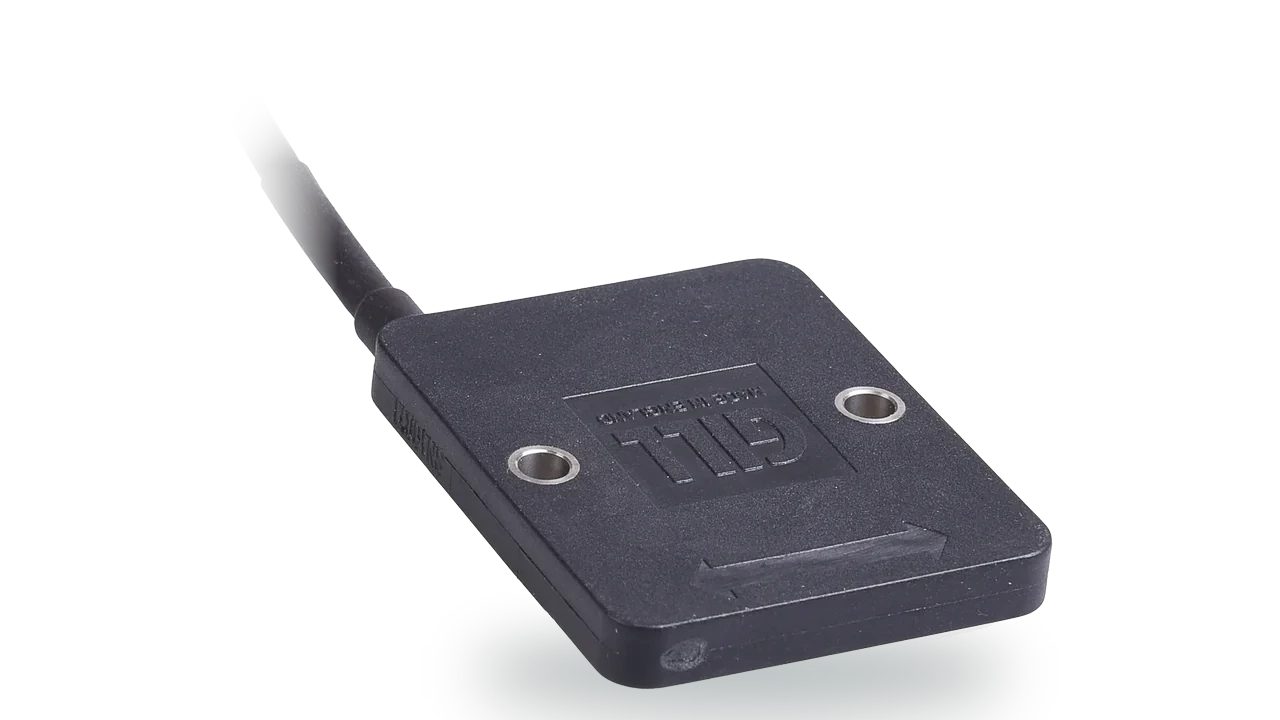
The DD1615 level display is the display accessory for the Gill level sensor range. It gives a local readout of tank level where there is no telematics unit, controller or dashboard to receive the sensor signal, such as on a standby tank or a bowser.
Frequently asked questions
Diesel level in a generator tank is usually measured with a level sensor mounted through the top of the tank and wired to the generator controller or a remote monitoring system. A Gill capacitive diesel level sensor measures continuously along its probe with no float, so the controller sees gradual consumption and refuelling as they happen. Probe length, output and mounting are matched to the tank before the sensor is built.
A Gill level sensor can measure an irregular-shaped tank because tank profiling turns the level reading into a volumetric output. GSLevel, the configuration software for the Gill liquid level sensor range, profiles the tank through a configuration wizard or from a CSV file of the tank’s cross section. LevelDefend and custom builds are calibrated to the customer’s tank, so a tank drawing at enquiry lets an engineer confirm the approach.
Water in diesel does affect a capacitive level sensor, because water has a much higher dielectric value than diesel and changes what the probe sees where it collects at the bottom of the tank. Any level sensor in a contaminated tank is affected in some way, so regular water draining and good fuel housekeeping still matter. Describing the tank conditions at enquiry lets Gill engineers account for them in the installation.
A Gill diesel level sensor can connect to most telematics units and controllers that accept an analogue or serial input. LevelPro offers 0 to 10 V or 4 to 20 mA with RS232 for configuration, and CAN is available on other models in the range. Confirming the input the telematics unit expects lets the output be specified to match.
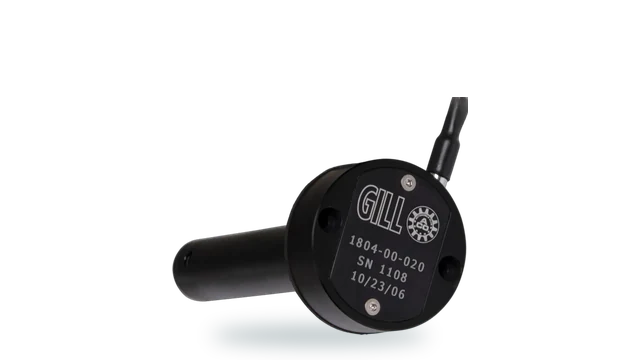
Gill diesel level sensor choice depends on where the tank sits. LevelPro is the robust stainless steel sensor for plant, generator and general-purpose diesel tanks. LevelDefend is a custom military-grade sensor for defence vehicles and marine craft, built to tolerate shock and vibration and calibrated to the customer’s tank. LevelLite is the lightweight aluminium option where weight matters. Gill engineers can help match probe length and output to the installation.
A Gill capacitive diesel level sensor has no float, arm or reed switch in its measurement, so there is no float to bounce on a vibrating excavator, locomotive or generator skid. The reading comes from the capacitance along a fixed probe. For defence vehicles and marine craft that see heavy shock, LevelDefend is built as a military-grade, environmentally sealed sensor designed to tolerate shock and vibration.
Gill diesel level sensors offer a choice of outputs, and the choice depends on the model. LevelPro provides 0 to 10 V, 4 to 20 mA or RS232. LevelLite adds CAN alongside RS232, voltage and current options, which suits vehicle networks and telematics. LevelSlick offers voltage, current or resistive output, and LevelDefend is built with the output the customer’s system requires. A 4 to 20 mA current output needs a 250 ohm load resistor.
A Gill diesel level sensor in the LevelPro or LevelLite range runs from a +5 to +32 V DC supply, which covers 12 V and 24 V vehicle and plant systems. One LevelPro output type uses a +9 to +32 V DC supply instead. LevelSlick and LevelDefend supply requirements are set out on the datasheet or the build specification, so confirm the figure for the model and configuration being specified.
Talk to an engineer
Tell us what you need to measure, where and under what conditions. We’ll help you work out the appropriate approach.
We aim to respond in one working day.
What our engineers will ask about
- Probe length and tankThe probe has to suit the tank depth and the mounting position. Share the tank drawing so the probe length and calibration match it.
- Output and receiving systemName the telematics unit, controller or display the sensor will feed. LevelPro offers 0 to 10 V or 4 to 20 mA, and CAN is available elsewhere in the range.
- Mounting, cable and fire rulesThread, flange and cable can be adapted. On rail traction, a LevelPro has been supplied with low smoke and toxicity cable to meet fire regulations.
- SealingLevelPro is sealed to IP66 and IP68. Confirm whether the tank sees washdown, immersion or outdoor exposure.