
















What is the difference between oil condition monitoring and oil debris monitoring?
Oil condition monitoring tells you about the lubricant. Oil debris monitoring tells you about the machine. What each one measures, what each one misses, and when you need both.
Oil condition monitoring and oil debris monitoring look at the same oil for different reasons. Oil condition monitoring measures the state of the lubricant itself: whether it is degrading, contaminated or still fit to protect the machine. Oil debris monitoring measures the wear particles a machine sheds into the oil, which shows whether the machine itself is being damaged.
What oil condition monitoring measures
Oil condition monitoring asks whether the oil can still do its job. A lubricant degrades in service: it oxidises, its viscosity changes, its additives are used up and it picks up water, fuel or other contaminants. Each of those reduces its ability to separate and protect moving surfaces.
Oil condition is traditionally checked by taking samples for laboratory oil analysis, which reports properties such as viscosity, acidity, water content and additive levels. Online oil condition sensors measure related properties continuously in the oil, commonly its dielectric properties, viscosity or moisture, and track how they change over time.
The result of oil condition monitoring is a decision about the oil: keep running it, find the source of a contaminant, or change it. An oil condition reading on its own says little about whether a bearing or gear is already wearing.
What oil debris monitoring measures
Oil debris monitoring asks whether the machine is wearing. As gears and bearings wear, they shed metal particles into the oil. The quantity, size and rate of those particles reflect what is happening to the surfaces that produced them.
An oil debris sensor sits in the oil path, commonly in place of the sump plug or in a bypass circuit, and detects wear particles as the oil carries them past. Fine particles come from normal running wear. A rising count of coarse particles indicates that a surface has started to break up.
The result of oil debris monitoring is a decision about the machine: keep running, schedule an inspection, or plan a repair before the component fails.
Which one warns of a failure
Oil condition monitoring and oil debris monitoring answer different questions at different points. Degraded or contaminated oil is a cause of wear: oil that has lost viscosity or carries water protects surfaces less well, and wear follows. Debris in the oil is evidence of wear that is already happening.
Oil condition monitoring is therefore the earlier, preventive signal for lubrication problems, while oil debris monitoring is the direct signal that a component is being damaged, whatever the cause. A misaligned shaft or an overloaded bearing can shed debris into oil that is otherwise in good condition, and only debris monitoring will see it.
Using them together
On critical equipment the two methods complement each other rather than compete. A practical programme combines continuous oil debris monitoring for early warning of component damage, oil condition monitoring or periodic laboratory analysis to manage the lubricant, and vibration monitoring to locate and diagnose mechanical faults.
Continuous sensing matters most where samples are hard to take, where a fault can develop between sampling intervals, or where the equipment is remote, such as a gearbox at the top of a wind turbine tower.
Where WearDetect fits
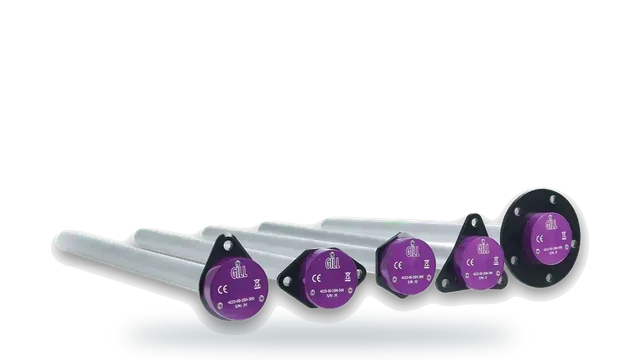
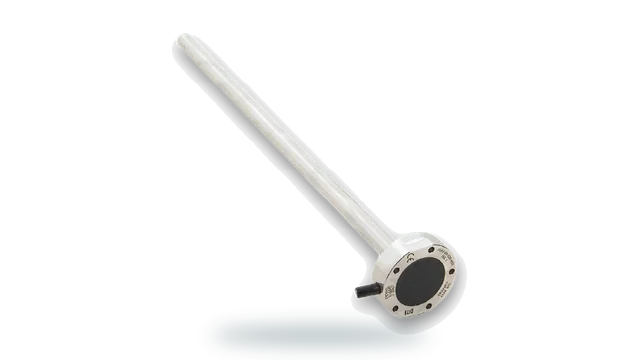
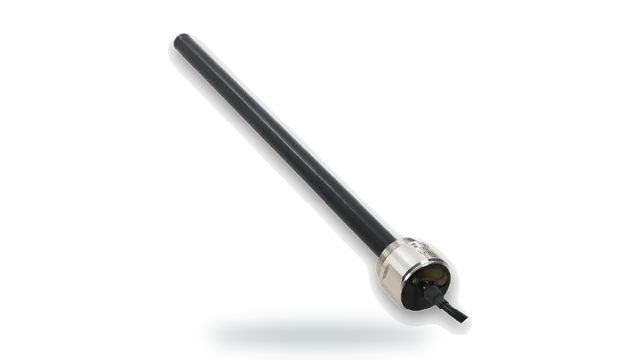
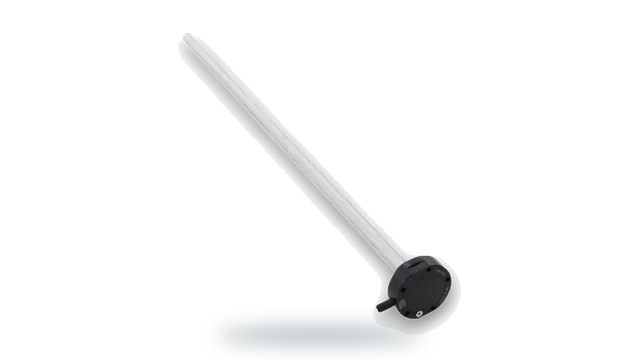
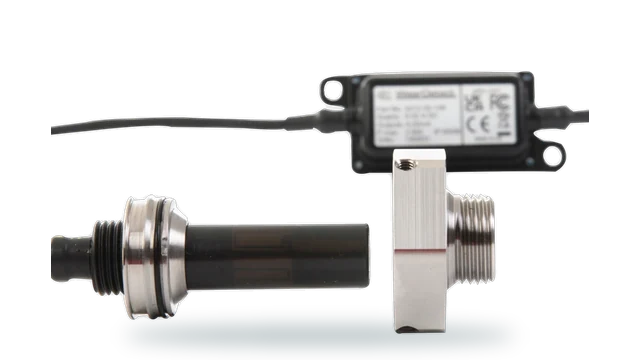
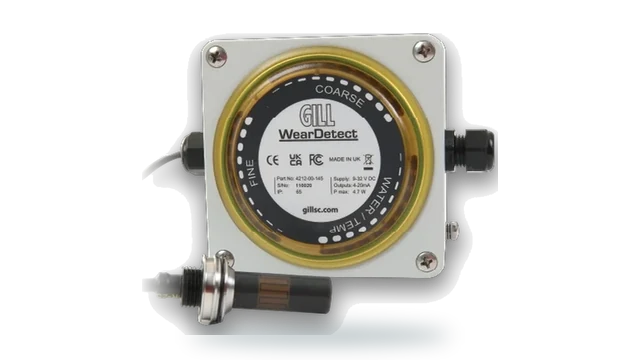
WearDetect is an oil debris sensor. It fits as a smart replacement for the sump plug or in an oil bypass circuit, uses a magnet to capture ferrous wear particles, and reports how much fine and how much coarse debris it has captured.
- Reports captured fine and coarse ferrous debris separately.
- Also reports water presence, which needs around 10 per cent free water to detect, and oil temperature.
- Outputs as analogue 0-10V or 4-20mA, or digital CANbus or Modbus RTU, so it wires into the monitoring system already on site.
WearDetect is not an oil condition sensor. It does not measure oxidation, viscosity or additive depletion, and it targets ferrous wear rather than non-ferrous debris. Where the condition of the lubricant itself needs managing, pair it with oil condition monitoring or laboratory oil analysis.
Questions that usually come next
Oil debris sensing for rotating equipment
A magnet in the oil path captures ferrous wear particles and reports fine and coarse debris, water presence and oil temperature, continuously.
See the sensorMachinery conditionWhat causes bearing failure in gearboxes?
Overload, misalignment, contamination and heat, the signature each one leaves in the oil, and how early it can be caught.
Read the answerApplicationDrivetrain and machinery condition
What changes when the gearbox is at the top of a tower and a site visit is a crane hire rather than a walk across the floor.
Read the applicationHave an application to discuss?
Speak to our team
Tell us what you need to measure, where and under what conditions. We'll help you work out the appropriate approach.